Call Us
86-0311-85301359
Jan 25 2021
Read More

In industrial hose systems, many leaks do not occur suddenly but start from a slight loosening, insufficient clamping force, or misalignment during installation. Hose clamps may appear to be merely fasteners on the outside of the hose, but they directly affect the sealing, vibration resistance, and long-term safety between the hose and the fitting.
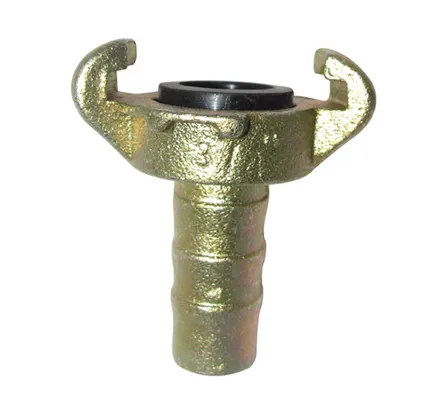
Shijiazhuang Donghuan Malleable Iron Technology Co., Ltd. is located in Wuji County, Shijiazhuang City, Hebei Province, and has long been focused on casting production and mechanical processing. The products cover malleable iron pipe fittings, European and American style air hose fittings, heavy-duty double bolt pipe clamps, pipe clamp accessories, grounding fittings, quick couplings, cam lock fittings, and copper valve accessories. Donghuan Malleable Iron Technology provides stable, durable, and easy-to-assemble connector products for air, water, construction machinery, agriculture, workshop pipelines, and general industrial transmission scenarios.
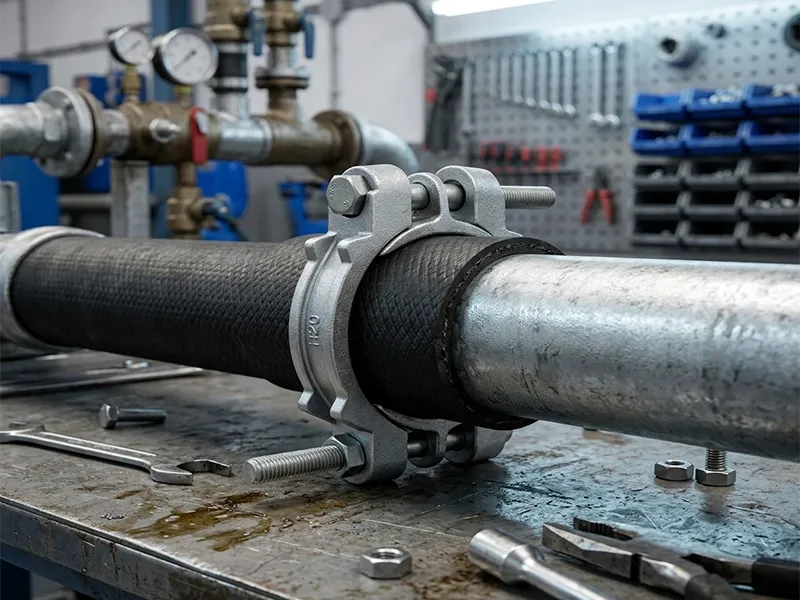
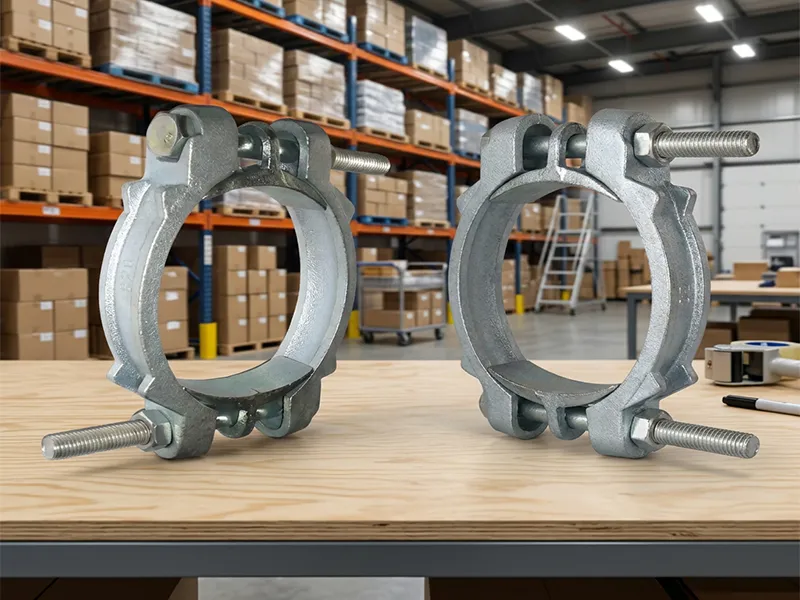
Hose clamps are mechanical fasteners installed on the outside of hoses, securing the hose to fittings, nozzles, pipe ends, or connectors through circumferential clamping force.
The function of hose clamps is to press the hose tightly onto the outer wall or barbed structure of the fitting, forming a stable fit between the inner wall of the hose and the connector. For basic concepts about hoses themselves, refer to related materials on hoses.
In actual use, hose clamps primarily solve the following problems:
Reduce air leakage in pipelines
Decrease leakage at water pipe and oil pipe connections
Prevent hose slippage under pressure fluctuations
Increase friction between the hose and fitting
Reduce loosening of connections due to equipment vibration
Minimize maintenance rework and site downtime risk
Many pneumatic tools operate at a common working pressure of about 90 psi. However, in industrial hose systems, actual pressure is also influenced by pipeline length, medium type, temperature changes, pulse pressure, and equipment vibration. Therefore, hose clamps should not be chosen arbitrarily based on hose diameter alone but should be assessed as part of the entire hose connection system.
High-quality hose clamps usually have the following characteristics:
Uniform clamping force
The clamp should be able to apply pressure evenly along the circumference of the hose, avoiding localized over-tightening or loosening.
Reliable locking structure
Bolts, nuts, or fastening structures should screw smoothly and not easily loosen after locking.
Accurate size matching
Clamps that are too large may not clamp tightly, while those too small may damage the hose or be difficult to install.
Stable surface protection
Galvanizing, coating, blackening, or other surface treatments help enhance rust resistance.
Reasonable edge treatment
Clamp edges should not be too sharp to reduce the risk of cutting the hose's outer wall.
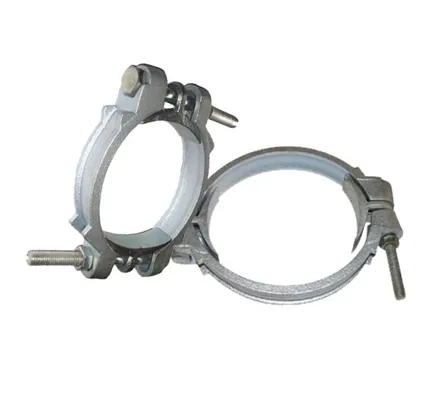
For distributors and industrial purchasers, batch consistency of hose clamps is crucial. If the clamping range, bolt smoothness, or surface treatment of products of the same specification vary greatly, rework, leaks, and customer complaints are likely to occur during field installation. Donghuan Malleable Iron Technology can produce heavy-duty double bolt pipe clamps and related connectors suitable for hose assembly scenarios requiring high clamping force and structural stability.
The structure of hose clamps refers to the form of the clamp body, locking method, number of bolts, material, and force design, which together determine its clamping ability and applicable conditions.
Different hose clamps are not simply distinguished by size but differ in structure and application positioning. Light-duty clamps are suitable for regular water pipes, low-pressure ventilation, or maintenance scenarios; heavy-duty double bolt pipe clamps are more suitable for large-diameter hoses, thick-walled hoses, vibrating environments, and heavier working conditions.
In outdoor, humid, or easily corroded environments, surface treatment significantly affects service life. For common processes in metal protection, refer to related materials on galvanizing.
| Type of Hose Clamp | Common Uses | Main Structure | Common Materials | Main Advantages | Suitable Scenarios |
| Worm Gear Hose Clamp | Common water pipes, air pipes, repair pipelines | Steel band with screw locking | Carbon steel, stainless steel | Easy installation, wide specification coverage | Light and medium-duty conditions |
| Strong Bolt Clamp | Cooling pipes, boost pipes, industrial hoses | Wide band with bolt and nut | Steel, stainless steel | Strong clamping force, evenly distributed force | High vibration or pressure scenarios |
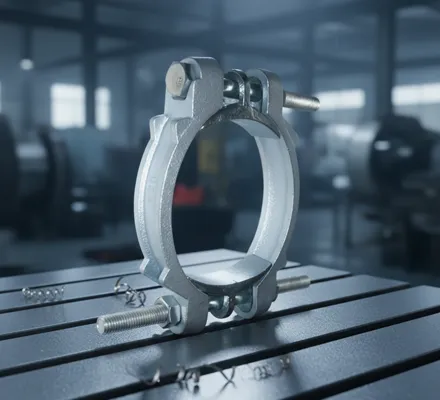
| Heavy-Duty Double Bolt Pipe Clamp | Large-diameter hoses, engineering, mining, transportation systems | Double bolt symmetrical locking structure | Malleable iron, steel | Strong clamping force, stable structure | Thick-walled hoses and heavy-duty conditions |
| Spring Clamp | Engine cooling pipes, small pipelines | Spring steel ring structure | Spring steel | Can adapt to certain thermal expansion and contraction | Significant temperature variation scenarios |
| Ear Clamp | Small-diameter hoses, mass assembly | Crumple ear deformation locking | Stainless steel, galvanized steel | Compact structure, not easily disassembled | One-time or semi-permanent connections |
| Wire Clamp | Spiral pipes, reinforced hoses | Wire ring with screw | Steel, stainless steel | Suitable for some specialized shaped hoses | Spiral or corrugated hoses |
Donghuan Malleable Iron Technology focuses on industrial connection applications, emphasizing structural strength, assembly stability, and batch consistency. For large-diameter hoses, thick-walled hoses, or more complex onsite environments, heavy-duty double bolt pipe clamps often provide more reliable clamping than ordinary light-duty clamps.
Material selection directly affects cost and performance:
Malleable Iron Hose Clamps: Suitable for heavy-duty fastening structures requiring high strength, with good toughness and impact resistance.
Carbon Steel Hose Clamps: High strength, relatively controllable cost, usually requiring surface rust protection.
Stainless Steel Hose Clamps: Good corrosion resistance, common 304 stainless steel typically contains about 18% chromium and 8% nickel.
Galvanized Hose Clamps: Suitable for most general industrial environments, balancing rust protection and cost.
Coated or Painted Clamps: Suitable for scenarios with appearance, rust protection, or customer branding requirements.
From a practical use perspective, the value of hose clamps is not just in the unit price but in whether they can maintain clamping force during installation, vibration, pressure fluctuations, and long-term use. For customers requiring long-term supply, stable size, stable surface treatment, and stable locking feel are often more important than a one-time low price.
Hose clamp maintenance inspections involve regular checks of the clamp's fastening state, installation position, corrosion condition, deformation degree, and the surface state of the hose to prevent leaks, slippage, and system failures.
Even if hose clamps appear normal externally, they may gradually lose clamping force due to vibration, temperature changes, hose aging, metal corrosion, or improper installation. Many clamps rely on bolts, nuts, or screw locking; basic knowledge of related fasteners can be referenced from bolts.
Common failure causes include:
Insufficient clamping
The clamp does not provide enough pressure, making leakage or slippage between the hose and fitting likely.
Over-tightening
Excessive locking force may damage the hose, the fitting, or cause thread damage or deformation of the clamp body.
Inappropriate specification choice
If a clamp is frequently at the extreme position of its adjustment range, its clamping force is usually not stable.
Misaligned installation position
The clamp is not pressed onto the barb or sealing area of the fitting, reducing the anti-slip effect.
Rust affecting locking
Rust can reduce the strength of the clamp body and may cause bolts to turn stiffly, resulting in uneven force.
Loosening due to equipment vibration
Mechanical vibration may cause some clamps to gradually lose locking force, particularly on high-frequency vibrating equipment.
Hose aging and deformation
After the hose hardens, cracks, expands, or compresses, the original clamping state may change.
In construction machinery, mining, agricultural irrigation, outdoor transportation, and workshop compressed air systems, it is recommended to periodically check hose clamp connection points. For systems with significant vibration, high humidity, or high usage frequency, checking every 3 to 6 months is a practical maintenance habit; for scenarios with higher safety requirements, the inspection frequency should be increased according to on-site management standards.
Daily checks can focus on the following items:
Is the clamp located in the correct sealing area?
Is the clamp body cracked, bent, rusted, or deformed?
Can the bolts and nuts still turn smoothly?
Is the hose surface crushed, cut, expanded, or cracked?
Are there any water marks, oil stains, bubbles, or medium residues around the fitting?
Has the clamp shifted from its original position?
When using double clamps, are both clamps equally stressed?
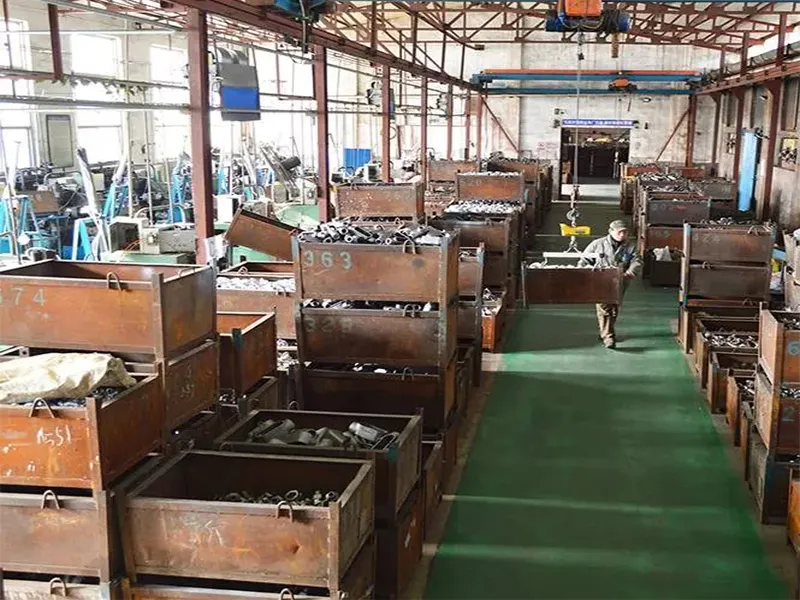
The company employs production line casting, coated sand casting, CNC machining, and metal stamping processes to support the stable production of heavy-duty double bolt pipe clamps, hose clamps, and related connectors. For purchasers, this means better size consistency, a smoother installation experience, and more reliable compatibility with hose fittings, pipe clamp accessories, and other products.
Hose clamps are mainly used to secure hoses to fittings, nozzles, pipe ends, valves, or connectors, helping prevent leaks, slippage, and connection loosening. They are commonly used in air, water, and oil transmission, construction machinery, agricultural irrigation, workshop pipelines, and general industrial systems.
Hose fittings connect hoses to pipelines, equipment, valves, or another hose; hose clamps secure the hose to the fitting or nozzle. In many hose assemblies, both are needed to work together.
When the hose diameter is large, the pipe wall is thick, on-site vibration is significant, working conditions are heavy, or stronger mechanical clamping force is needed, heavy-duty double bolt pipe clamps are suitable. They are common in engineering, mining, industrial transportation, and heavy equipment hose connections.
Some hose clamps can be reused if they have no rust, deformation, thread damage, or clamping structure failure. However, if the clamp body, bolts, nuts, or locking parts are obviously worn, it is recommended to replace them with new ones to reduce the risk of leaks and detachment.
Common reasons include equipment vibration, hose compression deformation, temperature changes, rust, improper specification choice, incorrect installation position, or insufficient initial locking. Regularly checking clamp status helps maintain hose connection safety.
Yes. Shijiazhuang Donghuan Malleable Iron Technology Co., Ltd. can provide hose clamps and heavy-duty double bolt pipe clamps based on samples, drawings, material requirements, surface treatment, packaging methods, and usage scenarios, and can also supply hose fittings and other industrial connectors.
Although hose clamps are small in size, they play an important role in preventing leaks, slippage, vibration resistance, and ensuring the stable operation of systems. Suitable clamps can reduce maintenance frequency, decrease downtime risk, and enhance the long-term performance of hose assemblies.
If you need heavy-duty double bolt pipe clamps, hose clamps, or supporting industrial connectors, Shijiazhuang Donghuan Malleable Iron Technology Co., Ltd. can provide practical manufacturing and supply support for your application scenarios. Donghuan Malleable Iron Technology will continue to focus on structural durability, production stability, and customer needs to provide reliable products for industrial hose connection systems.